
News Desk

The astronomical bodies fire off powerful jets in two distinct phases in their feeding cycle, researchers discover.

Until now, scientists have concentrated on reading the message: its genetic letters, the length of each fragment, and where in the genome it came from. A new preprint study suggests that how the message is folded could matter too.

Our new study published in the journal Libyan Studies shows how we uncovered the earliest known large-scale construction of a probably defensive nature in North Africa beyond the Nile Valley. It’s about 4,000–3,500 years old…This discovery pushes back the evidence for organized defensive architecture in the Maghreb and suggests that societies in this region at this time were more complex and structured than previously believed.

An international research team has re-examined historical fossil collections from Lebanon using modern methodology. The results, published today in two complementary studies in the journal Communications Earth & Environment, show that the Levant served as an important corridor for animals and various human lineages during the Pleistocene and that environmental conditions in the central part of the region differed significantly from those in the south.

“The tooth itself is in immaculate condition. It’s the most complete mastodon molar from our area, and the most spectacular mastodon molar that I’ve ever seen. I had chills and shivers up and down my spine,” said paleontologist Wayne Thompson in a statement. “It’s another puzzle in the Ice Age saga that we can put into place.”

New research suggests that pairing a brief form of couples therapy with MDMA can lead to large improvements in posttraumatic stress disorder symptoms and relationship satisfaction for veterans and their partners. The preliminary findings, published in Journal of Traumatic Stress, provide evidence that these benefits occur even when only the diagnosed veteran receives the medication.

Virtually all cultures and eras fizz with magic. You might call it a secret ingredient of human life because magic takes so many forms and serves so many functions.
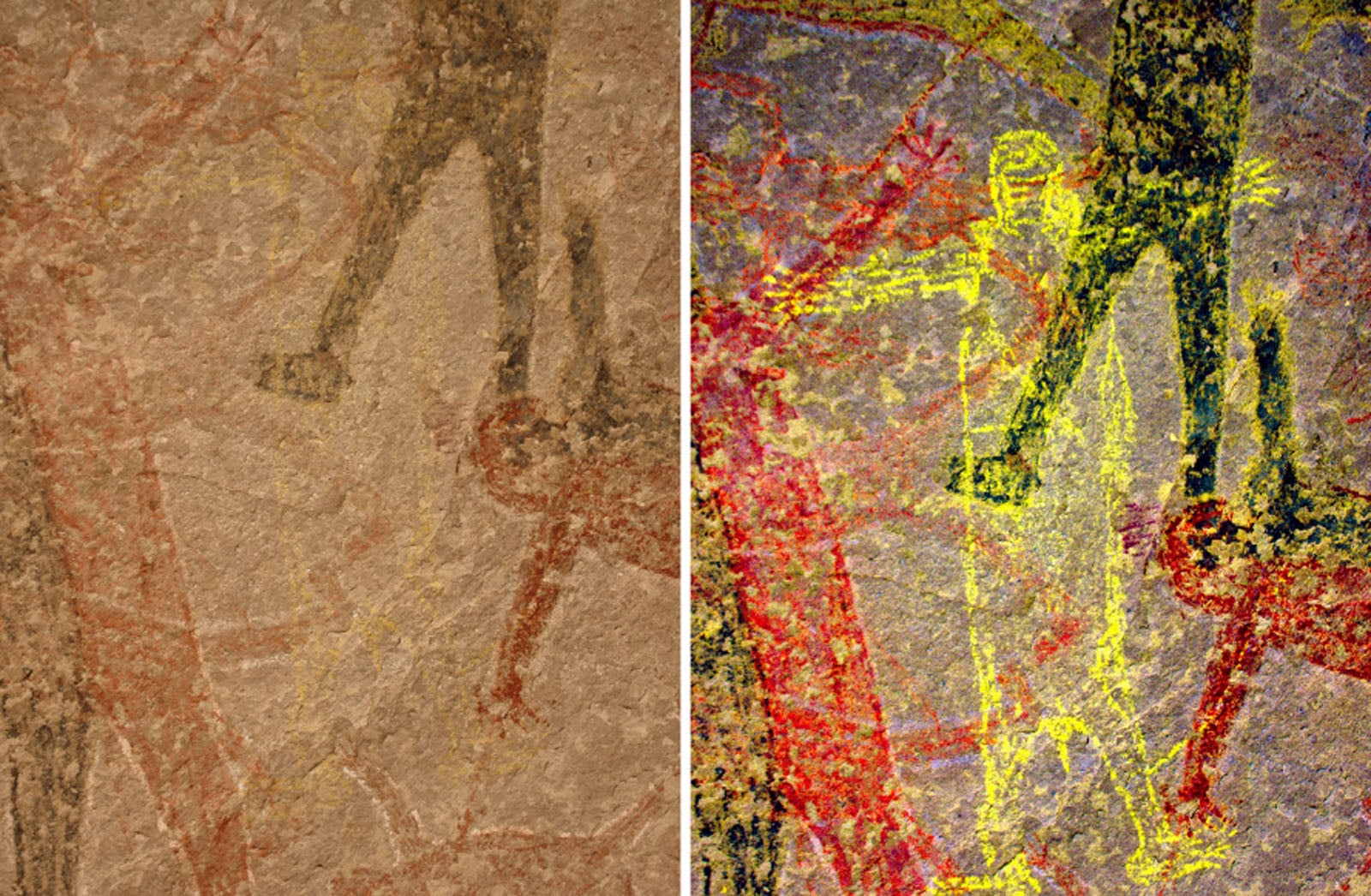
A rock art enthusiast used an image processing technique that scientists at NASA’s Jet Propulsion Laboratory developed to improve the detail of satellite photos of Mars’ rocky surface to reveal ancient, faded artwork here on Earth.

Recent research suggests that giving mice a compound found in magic mushrooms before chemotherapy can prevent the debilitating nerve damage that often accompanies cancer treatment. The findings indicate that psilocybin protects nerve fibers by keeping their cellular powerhouses moving and functioning properly. The study was published in Science.

Seven ancient human fossils and a cache of tools and animal remains found in a cave in southwestern China are illuminating the looks and lifeways of the mysterious Denisovans, who were close cousins of the Neanderthals and coexisted—and interbred—with modern humans, as well. The findings from the approximately 150,000-year-old fossils were reported in a pair of papers in Nature, here and here. (9th September).

A team of Griffith University archaeologists has uncovered evidence that humans were using mind-altering substances much earlier than previously supposed. The new study was published in Science Advances.

Excavations at Prado Vargas Cave in northern Spain have recovered more than 1,500 animal remains and stone tools from a Neanderthal occupation dated to about 46,000 years ago.
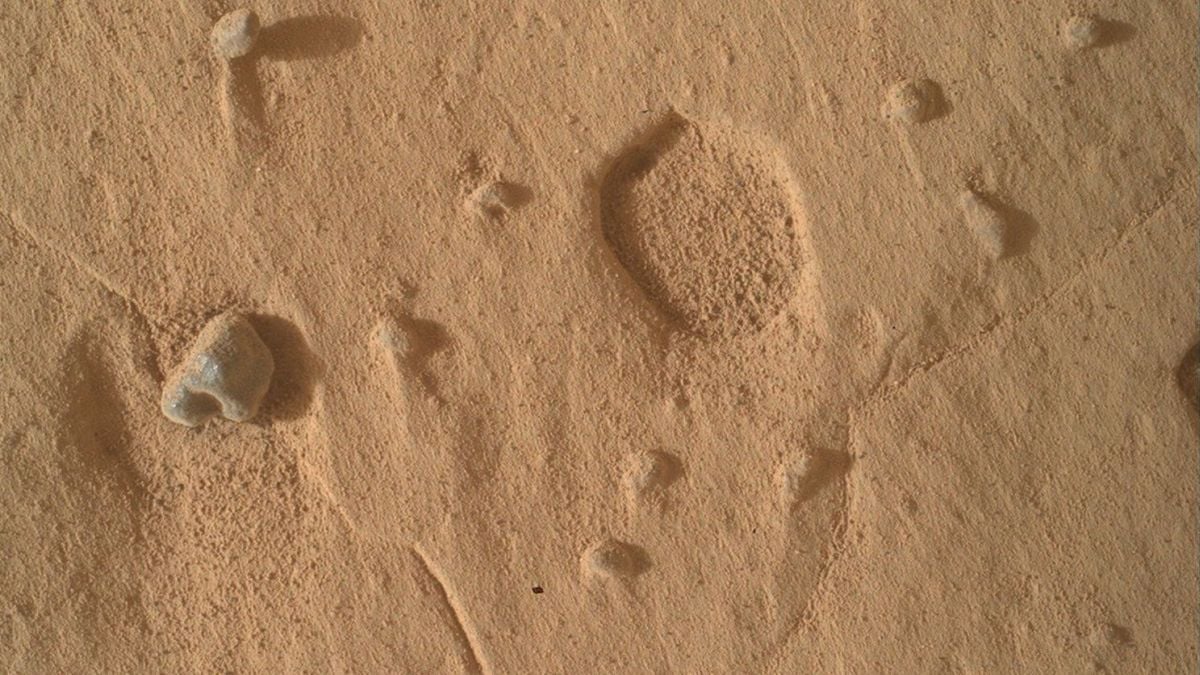
Even after all this time, however, the rover can still roll up to a new way Mars has found to be weird – something that defies easy explanation. This time, it’s holes.
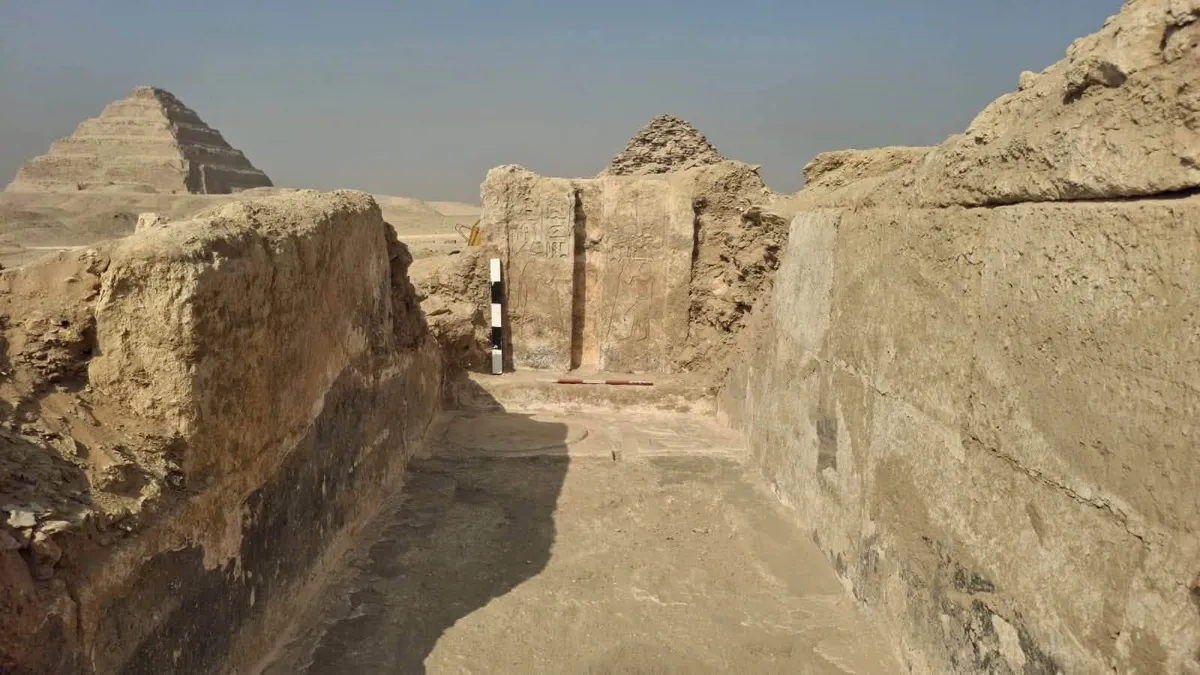
Archaeologists have recently been excavating tombs at the Saqqara necropolis, a UNESCO World Heritage Site around 40 kilometers (24 miles) southwest of Cairo. In the latest discovery, the team found a stunning tomb dating to the Old Kingdom, roughly 4,700 to 4,200 years ago.

New research has revealed that ancient builders deliberately transported enormous 25-tonne stones across at least 18 kilometers (11 miles) to build Britain’s tallest surviving prehistoric stone row—the iconic Devil’s Arrows. The study, “Deliberate Prehistoric Sourcing of the Devil’s Arrows, Britain’s Tallest Stone Row,” was published in the Proceedings of the Royal Society A: Mathematical and Physical Sciences.
Scientists are battling over whether supposedly simple organisms should be considered ‘intelligent’…The battle is fraught, sometimes dirty. Michael Levin, a Tufts University professor who is perhaps the most polarising figure among the biogenic group, believes that every individual cell is intelligent and cognitive in its own way; for this, he told me he regularly receives hate mail. (One letter called him “dangerously insane”.)
War God: Night of Sorrows
Get your copy of War God: Vol III


Magicians of the Gods
Get your copy of Magicians of the Gods: