



Yonaguni: The Main Monument and its Surroundings
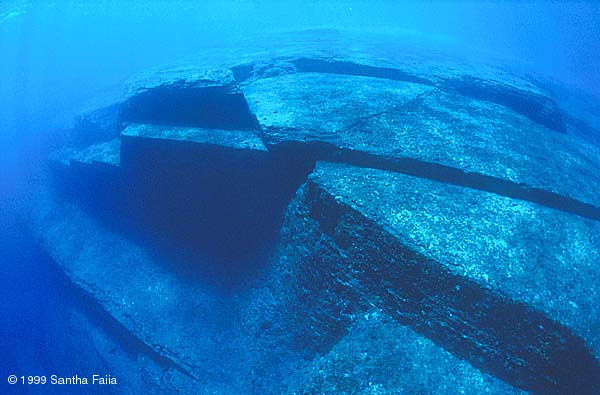
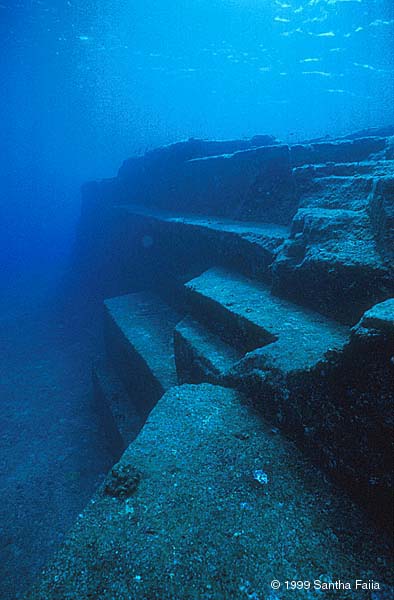
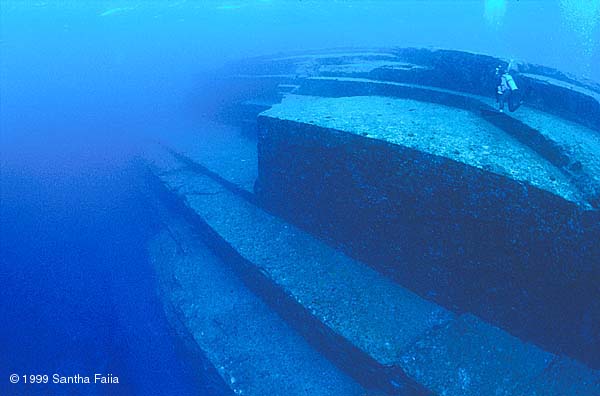
Terraces and steps: perspectives of the south face of the main monument, Yonaguni.
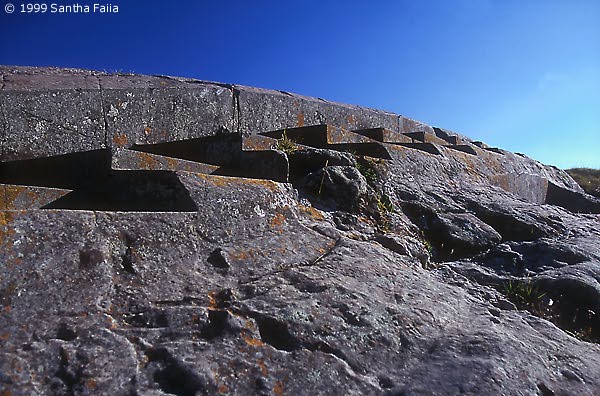
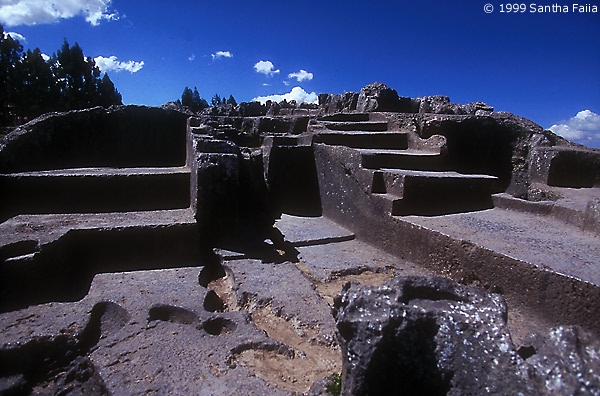
Terraces and steps: prehistoric rock-hewn structures at Sacsayhuaman (left) and nearby Qenko (right) in the high Andes mountains of Peru.
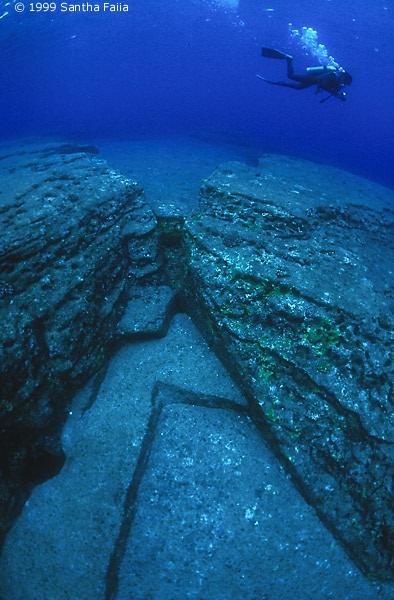

LEFT: View of the internal right-angle of the Basin. It is difficult to see how such a feature in such a protected setting could have been produced solely by natural forces such as waves or tidal action.
RIGHT:Turtle figure carved into the top of the eastern side of the main monument.
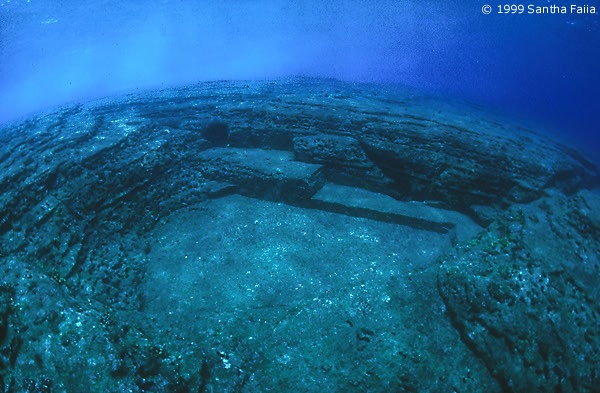

Two views of the “Basin”, a pool-like structure near the apex of the main monument. It features a right-angled internal corner, sheltered by surrounding elevations.
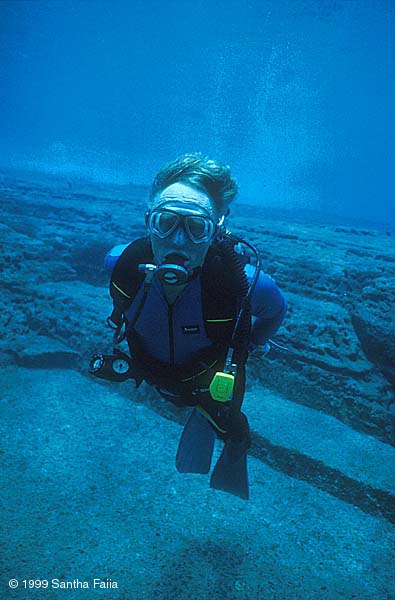

Graham Hancock diving in the “Basin” at Yonaguni.
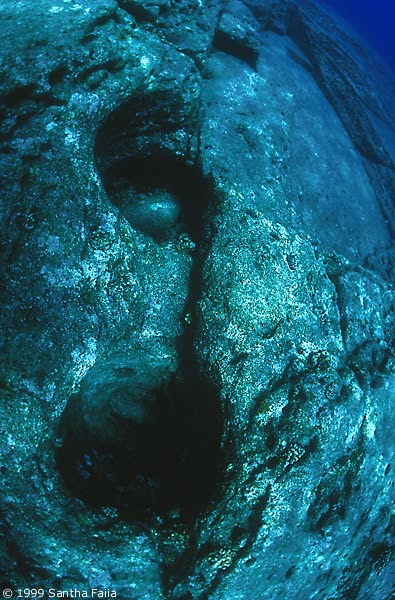
A series of three vertical holes run in alignment along the Basin’s straight edge. Some geologists have described them as pot-holes, which they may well be. However their direct and immediate association with another curious feature – the Basin itself – should force us to consider other possibilities as well.
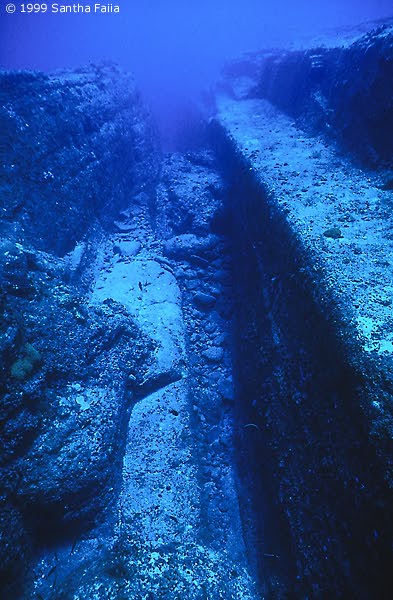
Second area of terracing half a kilometre south of the main monument. Found at the base of a sheltered east-west defile and at a depth of 27 metres, it could not have been subjected to the &wave and tidal forces& that some geologists believe were responsible for the Yonaguni anomalies.

Curious feature, close to parallel megaliths, with an apparent curving sloped stone path flanked by parallel curving walls.

Megalithic entrance tunnel leading to parallel megaliths.
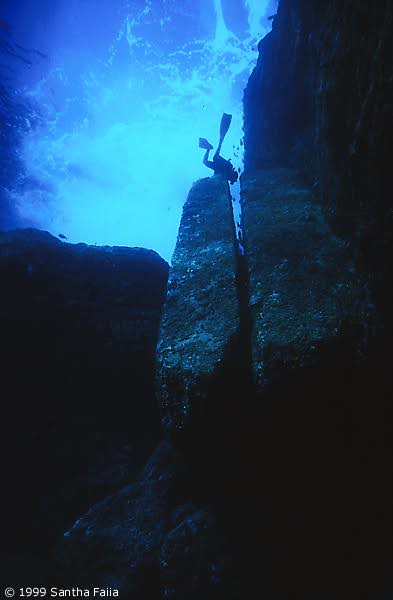
Parallel megaliths with diver for scale.
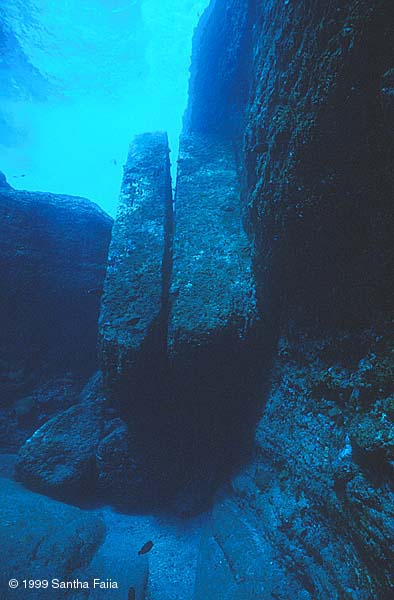
Parallel megalithic blocks oriented east to west and lying at the north-west corner of the main monument.
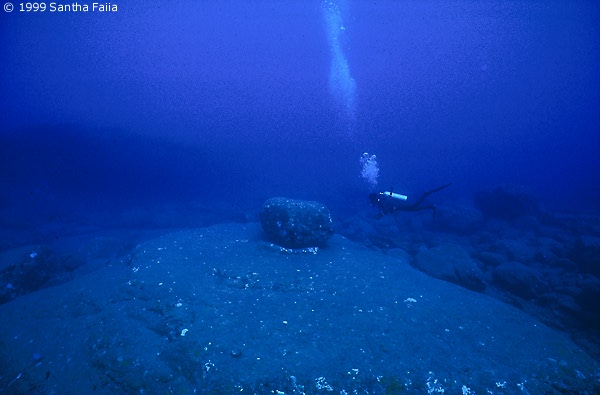

Two-ton megalith surmounting a carved platform 300 metres to the east of the main monument.
All photographic images are copyright © 1999 Santha Faiia. None of the images may be reproduced without the prior written permission of the copyright holder.