




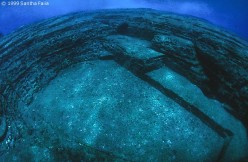
Yonaguni Japan, by Santha Faiia
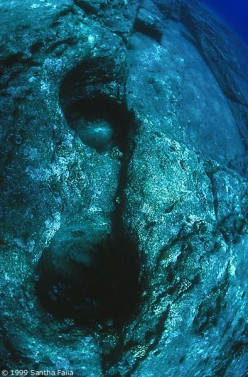
Yonaguni Japan, by Santha Faiia
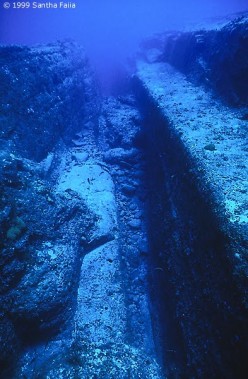
Yonaguni Japan, by Santha Faiia
Most of us are familiar with the idea of lost civilizations. Whether it is through television, or comic books or through the original source of Plato’s Timaeus, we have all at one point or other heard about the ‘lost kingdom of Atlantis‘ as well as slightly less known examples such as Lemuria.
Those of us who are educated can be entertained by these notions, but ultimately dismiss them as being fanciful and unfounded. Our modern and well developed understanding of archeology and of our history tells us that the legend of Atlantis is just that, a legend.
What if, however the answers were not as 100% airtight as you might think, and that while conventional wisdom may indeed be true, that there are serious and legitimate questions to be asked about and explored regarding our history.
One person doing just that is journalist and world renowned author and historical/archeological sleuth Graham Hancock.
Born in Edinburgh Scotland, and spending a significant period of his childhood in India, where his father practiced as a surgeon, Hancock began his writing career not as an explorer of ancient mysteries, but rather as a journalist.
In fact there are some who are more interested in debunking unusual and novel and innovative ideas out of hand, who like to point out that Hancock is not an Archeologist.
For the record, Graham Hancock is not an Archeologist, and has never claimed to be one. He is however an investigator of ancient mysteries with a very keen interest, a wealth of experience investigating various sites across the globe and a deep knowledge of the subject, both conventional and non.
What drew Hancock into the world of ancient mysteries was stories he would hear while working as the East Africa correspondent for the highly regarded magazine ‘The Economist’, in which claims were made that the ‘ark of the covenant‘ in which were placed the commandments given (as the faithful will say) by God unto Moses, was in fact located and kept in a town in Ethiopia called Axum.
His investigation into this mystery and subsequent book, ‘The Sign and the Seal ‘ became a best seller and set Hancock on a path that would take him from the tops of the great pyramids, to the bottom of the ocean, seeking out and exploring ancient mysteries, the most preeminent of those being the concept of a lost civilization, a lost chapter in our collective history.
The Lost Civilization
The exploration of the idea of a lost chapter in human history, is one that will take you across the globe and over ten thousand years into the past, but might be best started by looking at the remarkable work, architecture and engineering of the ancient Egyptians, most famously and notably expressed in the great pyramid at Giza.
What is remarkable about Giza, is not just it’s scale, but the accuracy and exacting tolerances to which it was built, a feat that would be a challenge for us in this modern age, and one that the ancient Egyptian’s presumably did with human manual labour.
This is not suggest, however that some sort of supernatural or otherworldly force was at work here, such as the Anunnaki, the civilizing ancient astronauts of ancient Babylon posited to the world by Zechariah Sitchin.
It does, however challenge credibility that the ancient Egyptians go from being presumably nomadic tribes and not building a whole lot of anything, to these massive and exactingly constructed monuments and megaliths springing up seemingly over-night and with little to precede it, or show steps towards the development of that knowledge.
This is an Historical mystery, but not one without answers, as Hancock questions why we are so quick to dismiss what the very peoples and civilizations that we are studying have to say about themselves and their development. Not to be taken as being a completely literal account, but to give us a window into the past through a legendary account most likely with some basis in historical fact.
What we find is talk of a ‘golden age’ called Zep Tepi, in which gods walked among men, and preeminent among them is the Promethean figure of Osiris, who brings civilization to humanity.
What is particularly intriguing about this, is that this concept of a ‘great civilizer’ is repeated across the globe, among cultures that should have had no connection or interaction with each other. In addition to this other similarities start to crop up, such as the importance of pyramid building in ancient Egypt and then much later on in Mesoamerican civilization, or the global prevalence of flood myths.
This could be nothing more than a series of massive coincidences, or somehow the practices that we as human beings will naturally gravitate towards.
That, or it suggests that these legends, and this knowledge comes from a common and ancient source, a mother culture that has since vanished, with all but a hint of it’s existence erased from history.
Could this be true and is it even possible?
Show us just one pottery shard!
The most serious flaw in this line of thinking, and one that supporters of more orthodox theories will point out is a lack of physical evidence.
Now certainly, there are controversies regarding dating in the first place, especially inorganic material. Also a lot of dating is done contextually, which can cause problems if working from a false premise.
Some, as John Anthony West has famously done with the Sphinx, may challenge the conventional dating, and in this regard Hancock alongside Egyptologist and engineer Robert Buval have also provided evidence that while not outright giving a different date for the Sphinx or the great pyramids, does suggest that the entire Giza site was built to correspond with a much earlier period, of about 10500 BC.
Ultimately, however Hancock believes the reason we are not finding the smoking gun is not only are too few people looking, but they are also looking in the wrong place.
This is because human settlement, and thus human civilization tends to like to pop up around water-ways and coastal areas. If we are indeed looking at 10500 BC as being relevant to the story we should take note that what was prime real estate for human habitation in this time, is now very much under water today.
If one is to shrug or look to dismiss this, one should note that this lost coastline is not an insignificant area, as 25 million square kilometers were swallowed up.
The cause of this loss of shoreline was the end of the last ice age, in which kilometers thick sheets of ice melted, and massive glacial lakes emptied. These would have been events with dramatic and catastrophic peaks. This period of massive global flooding might also make one ponder the possibility that the story of Atlantis vanishing beneath the waves, as well as the biblical story of Noah, and in fact all of the flood myths which can be found throughout the world, in fact hearken back to this time.
A lot of research and exploration would need to be done, as so far marine archeology has barely scratched the surface.
Still as nascent as this field truly is there are already discoveries that suggest further investigation is meritted, such as the structures off of Yonaguni Japan. While debate still continues as to whether they are man-made or natural.
If it is proven they are man made, then this would have profound implications as the site was last above water around, yes you guessed it, around 10,000 years ago.
There is a long way to go before any of this is even close to becoming proven, espescially considering it would be uprooting long held conventional wisdom. However, as Hancock says, he is not trying to provide absolute answers, but rather possibilities, about what might have happened in the shadows of our distant past.
Next: the next article, ‘Uncovering Atlantis: Evidence of a lost chapter in human history’
Uncovering Atlantis: Evidence of a lost chapter in human history

The idea of an Atlantis, a lost civilization forgotten to history is an exciting and alluring concept, but is an advanced civilization predating our own even plausible?
Is it nothing more than a form of intellectual temerity to posit these ideas, flying in the face of not only conventional understanding, but also decades of peer reviewed research.?
There is also the problem of the fantasy hued image of Atlantis that popular culture such as television and comic books has ingrained in our minds. It is admittedly difficult not to imagine some dome covered sub-sea Utopian metropolis with technology advanced far beyond our own, much less that of the ancients.
It is in someways understandable, if not wholly admirable why some might meet such concepts with derision.
Some of the ideas regarding mankind’s distant past can become a challenge to accept for even the most open minds.
What if, however we step away from a ludicrous definition of advanced and instead posit the existence of not a single city, but an entire coastal civilization, that while not flying around in hover chairs are highly adept as builders, mathematicians and philosophers, and while not providing absolute material evidence , providing enough anecdotal and investigative evidence to suggest that a lost civilization older than our own is plausible, and possibly even likely.
Thanks to the efforts and decades of tenacious research by people like author and historical sleuth Graham Hancock we have a rich pool of resources and material describing how a fully formed civilization much older than our own could have formed, and where to go look for evidence if mainstream archeology ever had the will and the mandate to do so.
One such line of evidence which we will take a brief look at here is to take a look at how the ancients told their own story and see how some remarkable cultural congruences that while not proof unto themselves, pave a clear path towards the possibility of a lost civilization.
The possibility of Atlantis.
The civilizers
As we look to uncover and unlock the mysteries of the ancient past are we so resigned to view the ancient people’s own stories of their beginnings as nothing more than myth and folklore so as to render their own stories, their own testament to their place in history as invalid?
What if we took these stories as neither pure myth nor literal account, but rather as a story that is and has become heavily mythologized, but is also at it’s core, based on true factual events.
What are the stories ancient peoples and cultures tell about themselves, and how human beings began to use technology, and to follow and explore moral codes, a time when humankind first became civilized.
These are the stories in summary of four ancient people.
| Prometheus
The first legend we will explore is also one of the better known, which is the tale of Prometheus who belongs to a race of giants called Titans who preceded the Olympian Gods. In the legend Prometheus (who’s name means forethought) is cast as a benefactor to mankind, running afoul of the Olympian gods and incurring the wrath of Zeus by stealing fire in a fennel stalk and giving it to human kind. For his trouble Prometheus is chained to a mountain where a giant eagle eats his liver, only to have the liver regenerate and the process start over again, until he is eventually unbound by the demigod Heracles and redeemed. |
 The punishment of Prometheus, Source: http://artpuzzlesgallery.com/ |
| Nanabozho
Often appearing as a rabbit, this shape shifting trickster spirit is sent by Gitche Manitou (The Great Spirit) to teach men, as well as naming the plants and animals. Nanabozho is also credited with teaching humankind how to fish and to write as well as passing on the Midewiwin, the secret sacred knowledge of the medicine men of the Anishinabe people, as well as the use of hieroglyphs. It is also Nanabozho who is said to have stolen fire from the weasels to give to mankind. |
 Nanabozho pictograph, Mazinaw Rock, Bon Echo Provincial Park, Ontario, Canada Source: By D. Gordon E. Robertson (Own work) [CC-BY-SA-3.0 (www.creativecommons.org/licenses/by-sa/3.0) or G |
| Kukulcan
Portrayed as both feathered snake god as well as an epic hero, Kukulcan (who is also associated with Quetzalcoatl) is credited with rising from the ocean and teaching the Toltec people such things as fishing and healing and the laws by which they lived. |
 Source: http://farm5.static.flickr.com/4097/4905056796_252ccc1342.jpg |
| Osiris
Osiris is well known as one of the chief Gods of ancient Egypt as lord of the underworld and of rebirth, as is signified by his being portrayed as having green skin. He is also one of the first Pharaohs of Egypt in a legendary time considered ancient by the ancient Egyptians themselves that was called Zep Tepi.(First Time). It is said that during this golden age Osiris taught the Egyptian people beer making, agriculture and the laws by which they were to live. |
 Source: http://farm5.static.flickr.com/4097/4905056796_252ccc1342.jpg |
A common thread
In each of these myths and legends we are told of how human beings were taught or given the rules and skills and technology (as symbolized by fire) to become and to be civilized. In each of these stories it is not an internally driven evolution, but rather of one in which mankind is a recipient of knowledge and help from a higher power.
Some have gone so far as to suggest that this ‘higher power’ were actually extra terrestrial beings shaping and guiding human history.
While this can not be absolutely ruled out at this point, as it is a very big universe, it does make sense to explore more earthbound options, that are no less exciting.
The first and most obvious explanation is that this is simply a retelling and recycling of the events of the agrarian revolution the very nascent period of the rise of civilization as orthodox academia understands it.
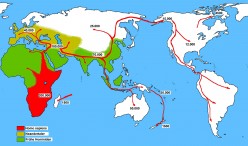
This would seem to make sense, except for the fact that the agrarian revolution happened around 7000-10000 years ago. The ancestors of North America’s human population has already passed through Beringia no less than two thousand years prior to that.
The Paleolithic North Americans had left before the party started, and yet here they are telling similar stories to the ancient Greeks and Egyptians, although they are separated by thousands of kilometers and thousands of years.
This would suggest that if these legends and myths are being based on a commonly shared historical reality then we have to push the timeline back to before human beings crossed the land bridge from present day Siberia.
The only other option is that each of these cultures spontaneously generated remarkably similar stories completely and utterly independent of each other.
While, just as with the alien hypothesis this is not impossible, it is hard to imagine how this could be proven.
Unless one is unwilling to accept any deviation from the orthodox timeline a common root source is much more tenable than multiple spontaneous generations of these stories.
This points very clearly to the possibility of civilization being much older than we believe it to be.
The possibility of Atlantis.
Atlantis Proven
Has this article proven the existence of Atlantis, or at least the concept that human civilization is much older than we had previously thought?
Far from it. As appealing and convincing as many of these arguments, and many more like them are, they are still largely circumstantial and anecdotal. They do not offer proof in the purest sense of the word.
What we do have here, however is a body of evidence that strongly points to the plausibility of these theories and mechanisms by how they might work.
In short, what we have here is a real legitimate mystery of the human story that is valid and worthwhile of the time and resources needed for proper exploration.
Next: ‘The Fall of the Kingdom of Atlantis: Envisioning a Lost Civilization in a Upper Paleolithic Context’
The Fall of the Kingdom of Atlantis: Envisioning a Lost Civilization in a Upper Paleolithic Context

Paleolithic cave painting from the Magdalenian culture showing a high level of sophistication. Source http://booksofart.com/wp-content/gallery/paleolithic-art/paleolithic-art-01.jpg
In the previous article Uncovering Atlantis: Evidence of a lost chapter in human history, we looked at how common themes in legends and foundational myths of various cultures seem to point to a common root culture much older than anything recognized today.
In this article we will expand on the premise of a lost ancient civilization, and explore whether it is possible at all to fit the possibility of a kingdom of Atlantis into our current understanding of our pre-history.
The Neolithic Revolution
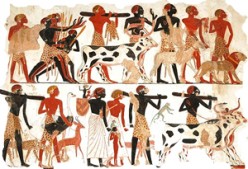
The first step we will take toward seeing whether or not the concept of an Atlantis can find some sort of continuity and congruence with our current orthodox view of human history is to first explore the conventional understanding of the inception and subsequent flourishing of human civilization.
This of course brings us to a very pivotal point in our history called the ‘Neolithic Revolution’ (also referred to as the ‘Agrarian Revolution).
It is during this time that human beings shifted from a largely nomadic hunter gatherer lifestyle, to a more sedentary agrarian existence. This shift led to a series of important changes in not only how we lived, but also how we interacted with each other.
It is believed to have happened over a long period of time and to have happened independently in different times at different places, with the earliest dating back around ten thousand years.
No one knows with absolute certainty how and why the Neolithic Revolution took root, as there are examples of the basic concepts of seed planting and harvesting on a smaller and less organized scale a few thousands years before more organized agricultural industries began to flourish.
However it began, once human beings made the shift from hunter gatherer to an agricultural society there were several repercussions to this that still largely affect society and our life as we know it today.
The first is that it led to a net increase in the food production capacity, as well as more stable and reliable food production, in a community which allowed for not only a significant upswing in population size but also the creation of an economy by which surplus grain etc. could be traded or bartered for other items.
Also, a combination of a need for storage and protection of harvested grains, along with the simple fact that being sedentary allowed it, led to an increase in building with a trend towards built up and more durable permanent structures.
Because there were more people, essentially working with more stuff but in a more defined area then had been previously, a new set of social divisions and conventions began to evolve as things such as laws became necessary and concepts such as property and taxation and social class began to take hold, the beginning of the complexities of modern social order.
Now if all of these events are true, does this not then signify the dawn of civilization and preclude a more ancient ‘Atlantis’ civilization?
Amazingly, as we are about to explore, perhaps not so at all.

Neolithic village. Source http://1.bp.blogspot.com/_tBqi5ja-dgs/Sps_VHQT6HI/AAAAAAAAA8o/RvX8iwRKajU/s320-farming.jpg
If the transition from hunter gatherer to agrarian and hence civilized society took place during and because of the Neolithic Revolution, and if that happened no earlier than ten thousand years ago, would not any human society before agriculture be, by definition considered primitive?
At face value the answer to this question would be a yes. There are, however several factors to consider that present a strong rational possibility for the existence of a much older civilization that predates the inception of our current modern thread of human development.
Let us first review some of what is already largely agreed upon.
- Human being were planting seeds a few thousand years before actual organized farming and agriculture took hold
- Robust and predictable food supplies in a defined area will lead to increased population growth and encourage sedentism.
- Human communities regardless of how they are organized will tend to have their highest densities at or near water.
- The dissemination of the agricultural lifestyle was slow and uneven, not all communities were willing or able to adopt it.
So now let us look at how and where our Atlantis culture fits in.
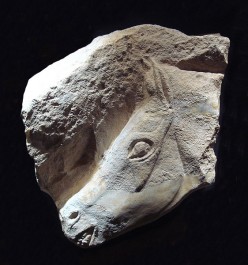
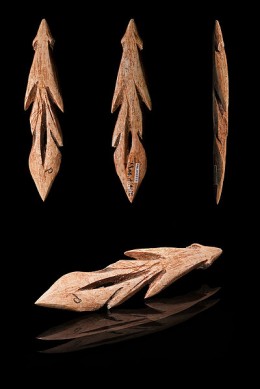


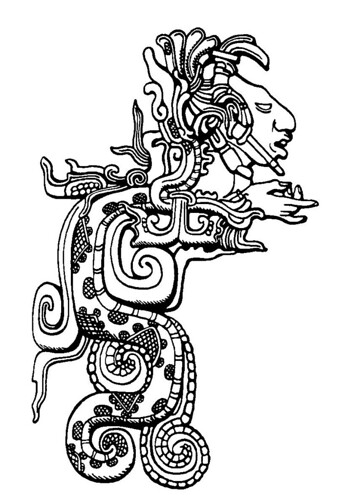


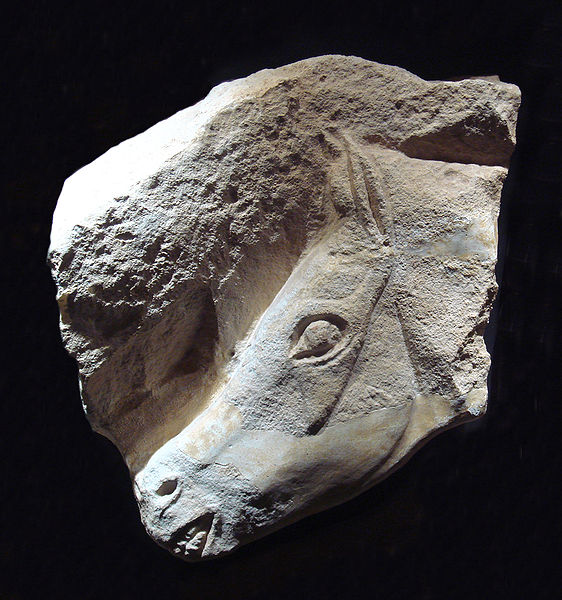

As we will see while there is no absolute proof, there is still a rather compelling argument for a civilization at least as advanced as that which flourished in Sumeria, but which took place thousands of years prior in built up and permanent coastal communities.
The first question you might ask is if such a civilization existed would we not find material evidence of them, as we do with the stuff that we know existed?
Perhaps, if not for the fact that the end of the last ice age led to some dramatic changes in the earth, including as many such as author and historical investigator Graham Hancock like to point out, that vast amounts of coastline disappeared underwater as content covering ice sheets that were literally kilometers thick began to melt in a relatively short period of time.
In total an area of about twenty five million square kilometers was swallowed up.
This is an extremely large amount of land, all exactly in places where we would expect to find concentrations of human beings.
So then, while we may agree that there would be human beings there, why are we to assume they are any more or less advanced than their inland contemporaries, and why would the inland human communities not share the same advances?
To answer this question, we must first look at our own modern world, and see that all societies, while all equally in the here and now all choose to, or are forced to follow a fairly wide range of social organizations, from the continuation to this day of the hunter gather lifestyle to sprawling huge modern metropolises.
All of this in our modern milieu of the communication age which makes us the most connected and interconnected people in world history. As we have seen, even the Neolithic revolution took a long time to spread. A society that had a sudden and dramatic surge in development in relation to other human communities could also very well have viewed itself as different, apart and likely even superior. The civilized people as opposed to the wild men and barbarians as it were.
So then just how did this Atlantean society come to be and how and why did it become advanced?

Magdalenian fish hook. Source http://t2.gstatic.com/images?q=tbn:ANd9GcTNnkD7VBAcT3Wa-jv05KQZnhYS0KXSCFGNQYjD3eM-x0Y2Xtiwlg

Jomon Pottery. Source Wikimedia


Solutrean tools. Source Wikimedia

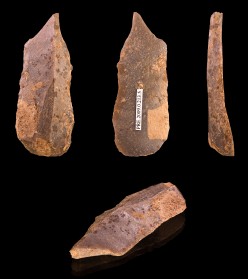
Gravettian tools. Source By Didier Descouens (Own work) [CC-BY-SA-3.0 (www.creativecommons.org/licenses/by-sa/3.0)], via Wiki
![By Didier Descouens (Own work) [CC-BY-SA-3.0 (www.creativecommons.org/licenses/by-sa/3.0)], via Wiki](http://upload.wikimedia.org/wikipedia/commons/1/15/Burin_213_5_Global.jpg)
The first clue to this is to look at what preceded the Neolithic Revolution. There we see a gap of a few thousand years between demonstrating an understanding of how to plant and grow seeds to the actual onset of agriculture. From the onset of agriculture it is a mere ten thousand more years to human beings walking on the moon.
What would have happened if human beings had instead of a few thousand years to go from ‘planting a few seeds’ today, they had forty thousand years?
Well that is exactly what could have happened, but it wasn’t likely with agriculture.
While the proto-agriculture is a stretch to make fourteen thousand years, the practice of fishing can be traced back as far as forty thousand years.
Granted fishing is often understood to be incorporated into the hunter gather subsistence lifestyle, but if human beings can go from learning how to plant seeds to farming in a few thousand years, then it is surely not impossible to imagine establishing some sort of larger scale fishery industry within forty thousand.
There is also the factor that while fishing techniques would need to develop, the fish and other seafood would already be there, essentially to be harvested. The fish stock already being their would provide a natural impetus to drive the technology to increase the scale of the fisheries.
As long as they controlled the coasts (and likely built fortifications to ensure they did) they would have had a robust and reliable food source, which while still technically speaking hunting and gathering could produce a high enough output of food production from a sufficiently concentrated area to have the same effect as the Neolithic Revolution in terms of population growth and the build up of sedentary communities. Quite likely setting many of the same social forces in motion.
All to be lost to the rising seas as the massive ice sheets melted. If evidence of this civilization is to be found, then it will be in the oceans where once coastlines existed and will not be easy to recover.
There is also the argument that the raising of the sea level happened over too long a period of time to have been responsible for wiping a people of the face of the earth.
While this is true, these people would not have had the benefits of modern science to warn them, and surely there would have been an influence of the melt-water on sea temperatures and relative salinity that would have placed a strain on the marine ecosystems that their large population depended upon.
It is not likely that the world beyond their cities was one that was friendly to them. Perhaps the Atlantean’s despite having drastically reduced fish stocks to feed a large population had become to civilized to survive outside their cities and remained in the vain hopes of finding a solution to hold back the sea? This of course is only conjecture, but it is not beyond the realm of the rational.
One could even argue for a cultural impact of the Atlantean civilization on other human societies. While interaction with other human groups would have been limited and likely more competitive and adversarial than cooperative, there is a pronounced leap from the Gravettian culture starting with an increased output of microlithic tools of the Solutrean onward to the much finer craftsmanship and artistic sensibilities and sophistication of the Magdalenian culture, as well as the pottery of the Jomon people.
This would not have been a direct and open exchange of ideas between the Atlantean civilization and their pre-agrarian inland contemporaries, but rather the results of infrequent interaction and certain amounts of emulation.
There is also a case maybe to be made for a greater influence of Atlantean culture, ironically long after their civilization had fallen.
That, however is a topic for an other article and an other day.
Conclusions

The city of Atlantis conceptual art. Source http://www.bitsofnews.com/images/graphics/culture/atlantis_picture.jpg

If there are traces of a lost civilization to be found beneath the waves off of our coasts, they will not be easy to find.
Marine archaeology is expensive and time consuming and with a limited number of people doing it .
There will likely be no proof and no answers until they look, but where exactly should they look? There is a lot of coastline to explore.
For that matter is there a reasonable enough expectation that they will even find anything there to help us better understand the human story?
It is the purpose of this article to argue the case that yes, yes there is very much reason to suspect this ancient civilization existed.
Not proof, but rather rational reasons why our lost Atlantis could and likely would have existed, and to stimulate fair and open minded debate on the topic.
Much of the arguments here are derived from the work of Graham Hancock, who may or may not have answers, but does ask really really good questions about our ancient past.